Booking.com iCal Sync Problems: Diagnose, Fix and Prevent Them
If Booking.com iCal sync problems are costing nights and time, HolsUK gives you unified calendar control, conflict rules and direct booking options — all from one dashboard.
Become a host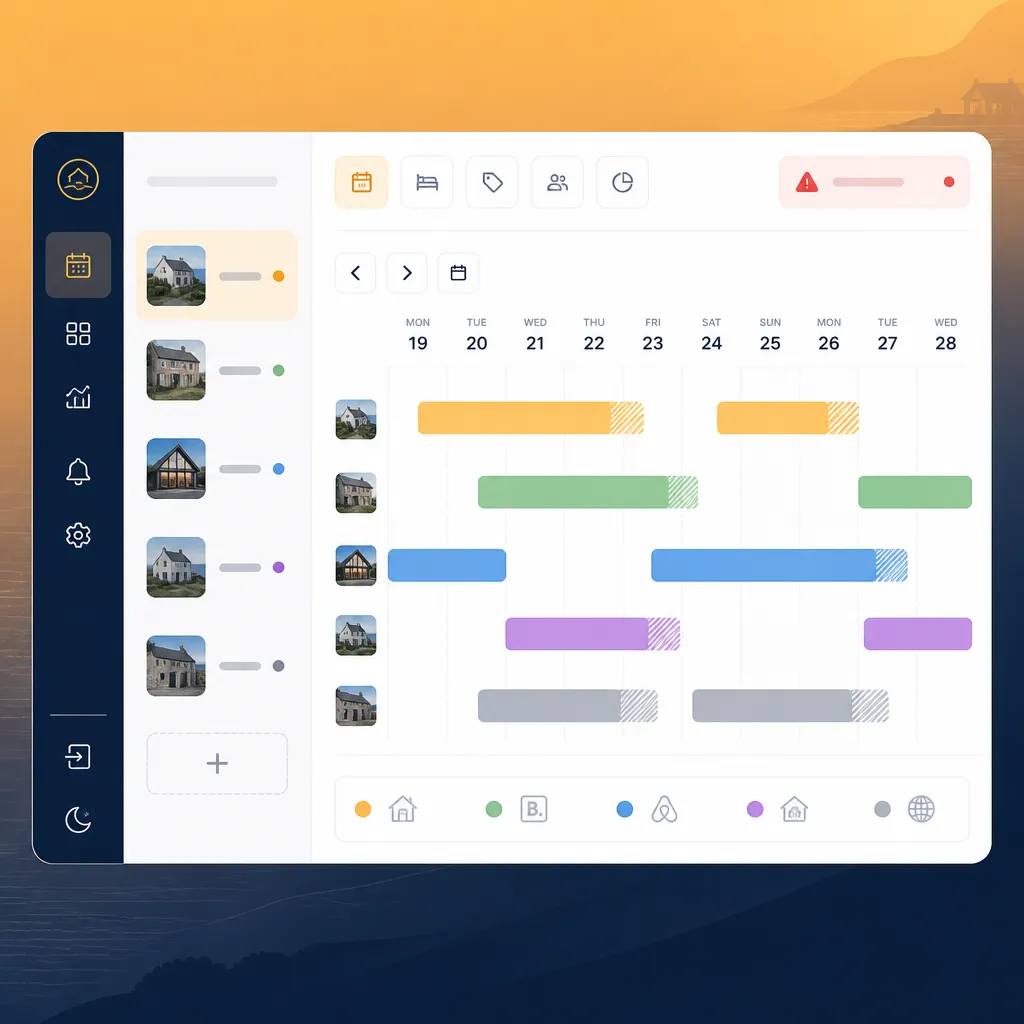
Why Booking.com iCal sync problems matter
Many UK hosts treat Booking.com as a core channel alongside Airbnb, Vrbo or Pitchup. But relying on iCal links for calendar sync can cause operational headaches: delayed updates, missing blocks, duplicate bookings and timezone shifts that move an arrival or departure by a day. Typical scenarios we see in the field include a Cornwall cottage owner taking a Booking.com reservation that never pushes to their Airbnb calendar, or a caravan park in Norfolk where a manually imported iCal feed fails after a platform rotates the feed URL. Booking.com’s iCal approach is inherently fragile because it’s often polled rather than pushed. Polling intervals can vary — sometimes minutes, often hours — so last‑minute bookings won’t always appear in time to stop another channel taking the same night. Other common problems are feed formatting changes, authentication or URL expiry, and truncated availability where blocked days get lost on import. For operators with multiple units and seasonal rates — think Lake District holiday lets or Peak District glamping pods — these failures are expensive: they lead to guest confusion, refunds, time-consuming manual reconciliations and poor reviews. Fixing the immediate symptom (re-importing an iCal file) doesn’t address the root cause: a setup that treats Booking.com as a manual calendar rather than a live, managed channel. The right fix needs robust conflict rules, consistent feed monitoring and a single source of truth for availability across every channel.
How HolsUK solves booking sync failures
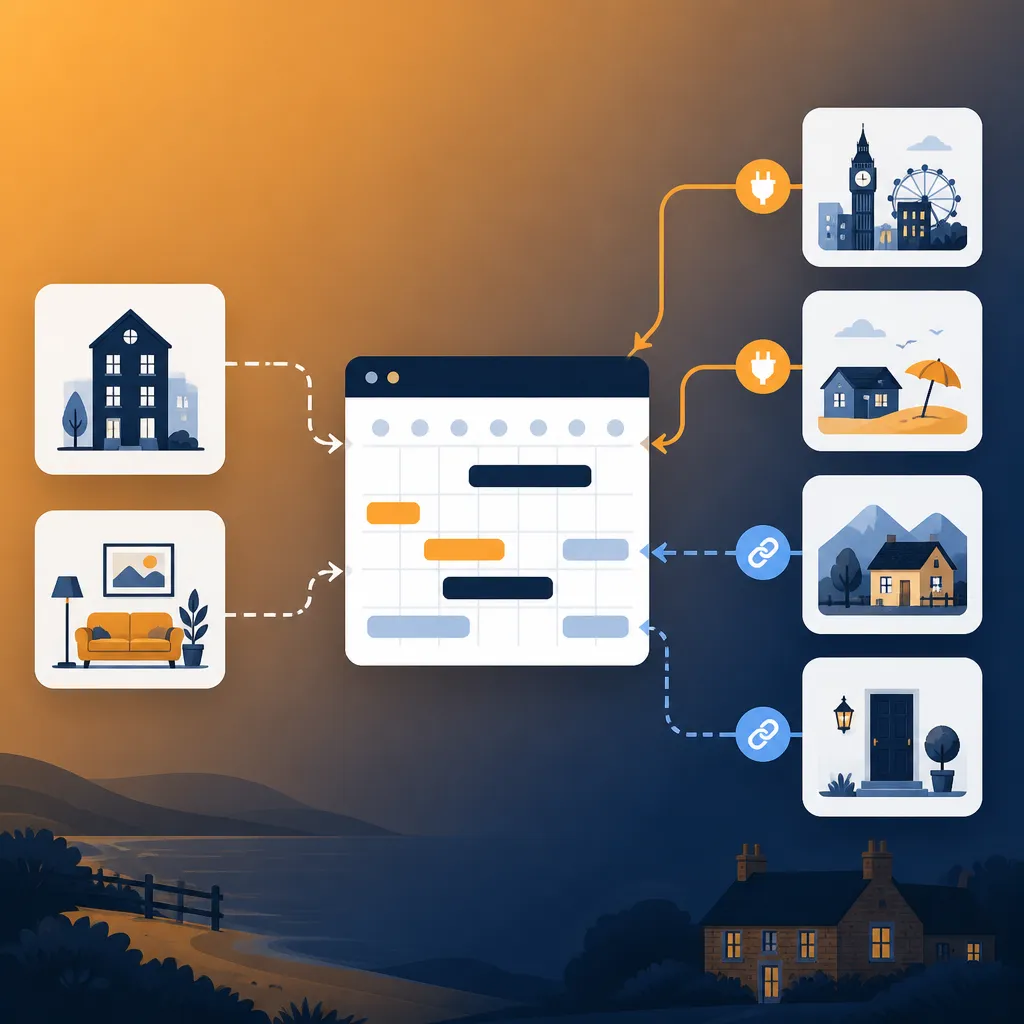
HolsUK treats Booking.com like the active sales channel it is. Where Booking.com connectivity via API is available we use that first; where it isn’t, we manage iCal feeds with tighter monitoring, conflict resolution and feed validation. That means HolsUK keeps one central availability calendar, maps individual units across channels and applies priority rules so a Booking.com reservation instantly blocks the same dates on Airbnb, Vrbo, Pitchup or a Cool Camping listing. For hosts using iCal feeds we add health checks (we detect URL changes, invalid responses and timeouts), automated re-sync attempts and alerts so you know as soon as a feed fails. Operationally that reduces the need for manual re-imports and the risk of double bookings. HolsUK also lets you set buffers for check‑in/out (for example, block the day before a stay for a longer turnover) and provides a direct booking option with Stripe so you can capture bookings without exposing availability gaps on OTAs. Cleaner scheduling, guest messaging and revenue reporting are handled from the same dashboard, so when a Booking.com iCal sync problem surfaces you can diagnose, resolve and report without bouncing between apps or spreadsheets.
Why this matters
Fewer double bookings
By keeping a single source of truth and enforcing booking priority rules, HolsUK cuts the risk of two channels selling the same night. For a multi‑unit property in Cornwall or a park with 50 pitches, that means fewer cancellations, less refunding and fewer upset guests.
Faster resolution
Automated feed health checks and alerts mean you discover a broken Booking.com iCal link before it causes damage. Instead of re‑importing calendars manually, you get a notification and can fix the source quickly — saving hours of admin each week.
Accurate pricing and availability
HolsUK synchronises rates and availability across Booking.com, Airbnb, Vrbo and specialist sites like Pitchup. Consistent nightly prices and minimum‑stay rules reduce rate parity mistakes and last‑minute price overrides that lead to lost revenue.
Cleaner, guest and payments workflow
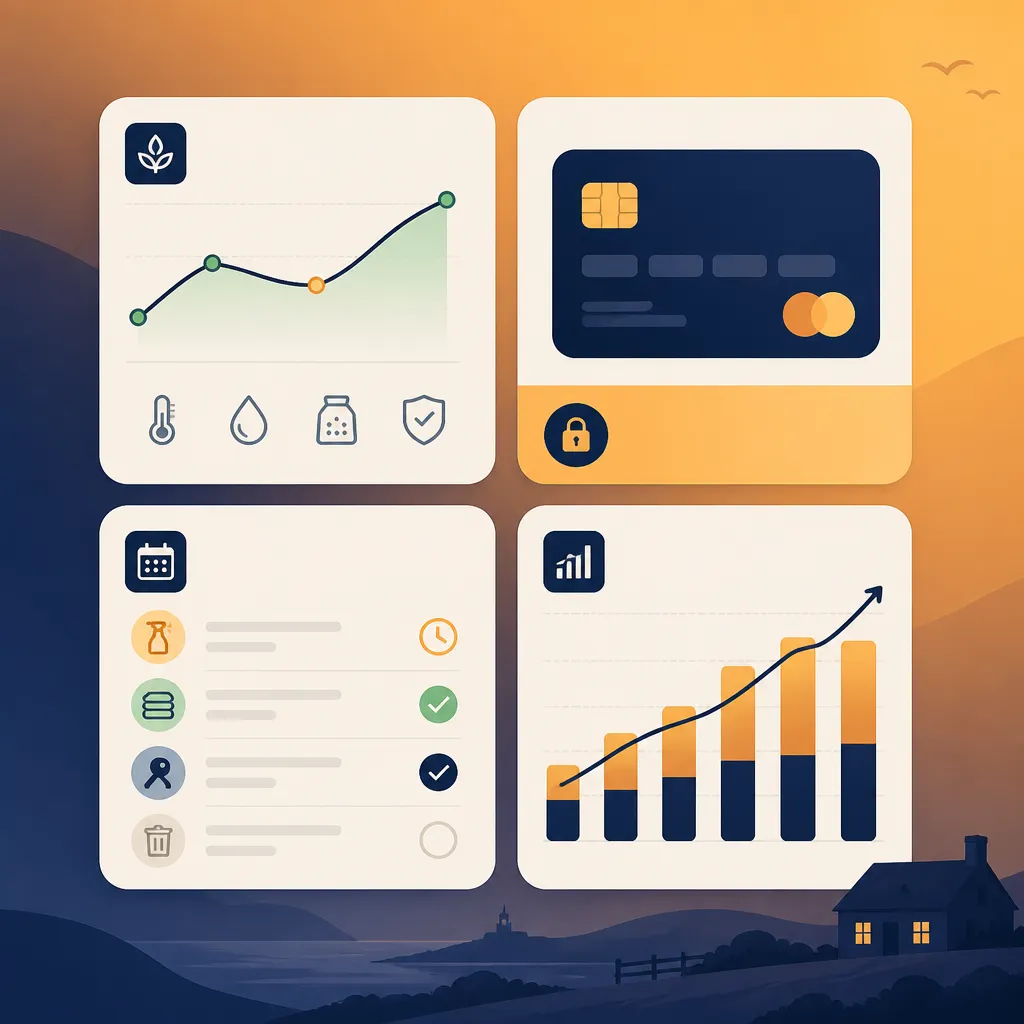
When calendars are reliable, you can automate cleaner schedules, guest messages and Stripe payments. That means fewer manual interventions and a smoother guest experience from booking to check‑out.
What's included
Channel sync (API and iCal)
HolsUK connects to Booking.com via official connectivity where available and supports iCal imports where not. We prioritise API over iCal, but when iCal is necessary we apply frequent polling, validation and automatic re‑sync attempts to reduce missed updates.
Central calendar and conflict rules
A single master calendar maps individual units across channels so a reservation from Booking.com immediately blocks the same nights elsewhere. You can set booking priority and buffer days (for turnover) to match your operational needs.
Feed health monitoring
We monitor feed responses, detect expired or changed URLs and alert you. That includes logging HTTP errors, malformed feeds and timezone conflicts so you can act before guests are affected.
Direct bookings + Stripe payments
Offer direct bookings from your website or HolsUK listing and take payment via Stripe. Direct bookings give you a fallback to capture demand when a channel feed is unreliable and reduce reliance on OTAs for every reservation.
Cleaner management & guest messaging
Automate cleaner schedules based on confirmed bookings and send templated messages to guests on arrival, check‑out and for payments. That reduces admin and aligns turnover with confirmed stays from Booking.com or any other channel.
Who this is for
Independent coastal cottage owner (Cornwall)
You list on Booking.com, Airbnb and your own site. An unreliable iCal feed caused overlapping bookings in high season. HolsUK centralised availability, applied occupancy buffers for Saturday changeovers and used API connectivity where possible to stop double bookings and reduce manual re‑checks.
Caravan park operator (Norfolk)
With 40 pitches across two fields you rely on Pitchup, Booking.com and direct calls. HolsUK mapped pitch IDs across channels, monitored feed health and automated cleaner/maintenance blocks so operational staff stop spending hours reconciling calendars.
Glamping site manager (Lake District)
You run pods and bell tents through Cool Camping and Booking.com. HolsUK kept seasonal rates consistent across channels, detected a rotated Booking.com feed URL and alerted you so a weekend with high demand wasn’t sold twice.
How HolsUK compares
Here’s how HolsUK stacks up against manual iCal workflows and basic channel synchronisation.
| Feature | HolsUK | Typical alternatives |
|---|---|---|
| Calendar reliability | One master calendar, API first and robust iCal validation with automated re‑syncs and alerts. | Manual iCal imports or basic sync often miss updates, leading to delays of hours or longer and higher double‑booking risk. |
| Double‑booking prevention | Priority rules and conflict resolution immediately block dates across all channels when a reservation arrives. | Many setups rely on polling windows; overlaps occur when two channels accept bookings in the same timeframe. |
| Feed health monitoring | Active checks for URL expiry, malformed feeds and timezone mismatches with instant notifications. | Standard channel managers may not alert you to feed rotation or subtle format errors — you often discover problems after a booking error. |
| Direct bookings and payments | Integrated Stripe payments and a direct booking option reduce dependency on OTAs during outages. | Rudimentary systems leave direct bookings as a manual process, increasing admin and missed revenue. |
| Operational tools | Cleaner scheduling, guest messaging and revenue reporting come built in to manage the whole stay lifecycle. | Many providers focus only on calendar sync; operators still need separate tools for cleaners, messages and reporting. |
Frequently asked questions
What causes Booking.com iCal sync problems?+
There are several common causes. Booking.com iCal feeds are often polled rather than pushed, so updates depend on the polling interval and can be delayed; that creates a window where two channels can both sell the same night. Feed URLs may change if Booking.com rotates them, and expired or modified URLs stop syncing. Timezone settings can shift arrivals or departures by a day if the host and the channel aren’t aligned (GMT vs BST). Feed formatting can break if a platform changes the structure of the file or includes unexpected characters. Finally, human error — copying the wrong URL, mapping the wrong unit ID, or not applying minimum‑stay or buffer rules consistently — is a frequent culprit. You can diagnose many of these issues by checking the iCal URL in a browser, viewing the raw feed for anomalies, confirming the timezone lines, and monitoring when bookings appear versus when they were made. HolsUK’s feed monitoring automates much of that checking and alerts you to failures so you don’t find out from a double booking.
How quickly should an iCal update appear on Booking.com and other channels?+
There’s no fixed guarantee across all platforms. Some sites poll every few minutes; others may take an hour or longer. With Booking.com specifically, many hosts find updates arrive within a short window but occasional delays of several hours happen. This variability makes iCal less reliable for last‑minute inventory changes compared with API integrations. If your operation sees frequent same‑day bookings or uses short lead times (for example, last‑minute weekend bookings in coastal resorts), rely on API where possible or use stricter buffer rules on your master calendar to protect availability.
Can HolsUK fix a Booking.com iCal feed that keeps failing?+
Yes. HolsUK first checks whether Booking.com API connectivity is available for your property; if it is, we switch to that to avoid iCal problems altogether. If API connectivity isn’t an option, we implement tighter iCal handling: automated validation, frequent polling, feed URL monitoring, alerts on errors and a conflict resolution policy so that when a failure occurs we minimise impact. We also help with the operational side — mapping listings correctly, checking timezone lines, and advising on policies such as minimum stays or check‑in days to reduce exposure to late changes.
Will using HolsUK prevent all double bookings?+
No system can eliminate every possible risk, but HolsUK substantially reduces it. We use API where available, maintain a single source of truth, and apply strict conflict rules. For feeds that must use iCal we add health checks, automated retries and alerts so feed failures are detected quickly rather than discovered after a clash. Operational choices — such as how many buffer days you set, how you map units, and whether you accept split stays — also affect risk. HolsUK gives you the tools to minimise those risks and the workflows to act quickly when issues arise.
How does HolsUK handle timezones and check‑in/out buffers?+
Timezones cause subtle calendar shifts when one system records dates in GMT and another uses BST. HolsUK displays each feed’s timezone and reconciles differences when importing. You can also configure buffers around bookings — for example, block the day before arrival for cleaning or require Saturday-to-Saturday minimum stays in high season. These settings are applied centrally so Booking.com, Airbnb, Vrbo, Pitchup and your website reflect the same availability and turnover rules.
What if Booking.com rotates my iCal URL?+
If Booking.com rotates the feed URL, a basic setup will simply stop receiving updates. HolsUK watches for failed feeds and alerts you immediately when an HTTP error or unexpected response occurs. Our logs show the change so you can replace the URL quickly. Where possible we migrate properties to API connectivity to avoid URL rotation issues entirely. If you still need to use iCal, we’ll document the feed location and include steps to re‑link the new feed with minimal disruption.
Ready to stop losing bookings to calendar errors?
If Booking.com iCal sync problems are creating work and risk, HolsUK gives you a single dashboard to manage channels, payments and operations. Start reducing double bookings and admin today.
Get started